Practical Information
- Dates:
- October 8, 2026, from 9 a.m. to 5 p.m., and October 9, from 9 a.m. to 4 p.m.
- 13 hours of training
- Location: Studio White Wall, Montréal
- Price: $49 (actual price: $317)
Training Overview
In the circus, movement and its qualities are at the heart of the work and the performance. Yet behind every movement lies an often-overlooked player: the brain. It constantly analyzes information from our senses to organize our movements, maintain our balance, adjust our coordination, and enable us to perform and adapt to our environment.
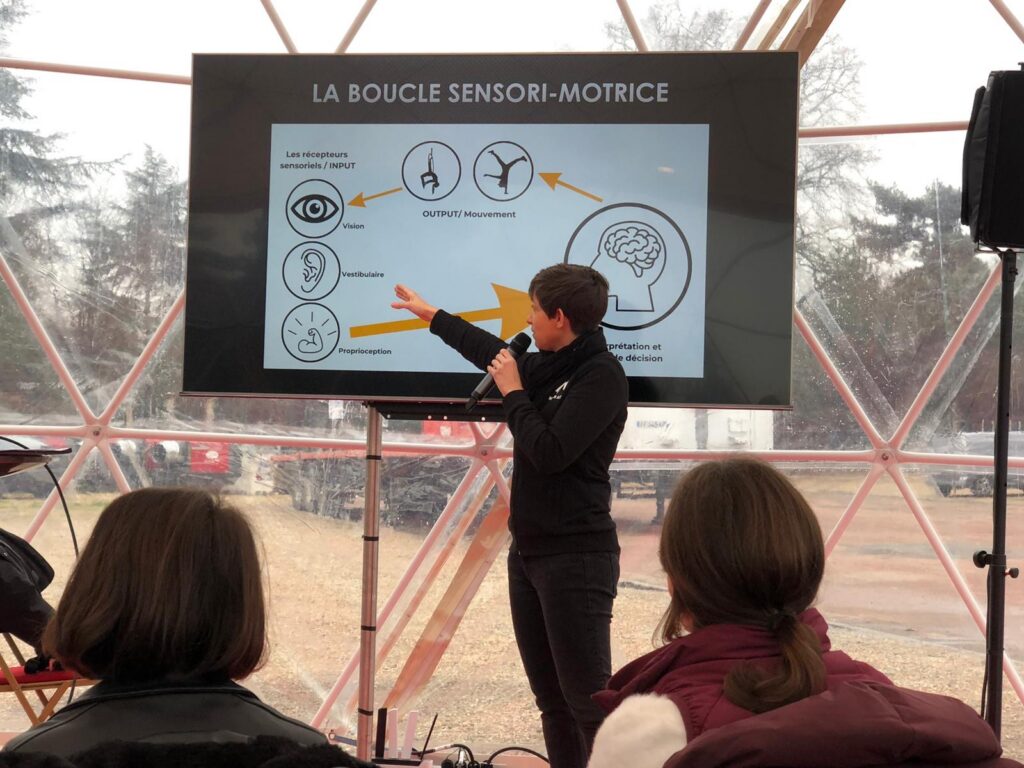
Drawing on this knowledge, Sabrina Martino invites you to discover “sensory training”—an approach rooted in neuroscience that places the sensory systems at the heart of performance. Vision, balance, proprioception, breathing, and environmental perception are all sources of information that the brain uses to coordinate each of our movements. By understanding how these systems work, it becomes possible to improve the quality of movement, accelerate certain motor learning processes, optimize performance, prevent injuries, and better meet the specific demands of circus disciplines. This approach also allows for personalized training tailored to each artist’s sensory needs, goals, and individual constraints.
During this workshop, the participants will explore the connections between perception and movement, the role of the various sensory systems, and their impact on circus movement (coordination, balance, strength, flexibility, precision, confidence in movement, etc.). They will also examine how to practically incorporate sensory exercises into their warm-ups, their daily training, and their performance preparation.
The workshop will alternate between theoretical instruction, demonstrations, hands-on activities, and case studies, so that each participant can leave with practical tools that are directly applicable to their own artistic practice.
What’s on the agenda
- Understanding the principles of sensory training.
- Discovering how movement works through neuroscience.
- Exploring the role of the visual, vestibular, and proprioceptive systems in performance.
- Integrating sensory exercises into your circus training.
- Delving deeper into the influence of breathing, flexibility, and the environment on the quality of movement.
- Experimenting with practical tools through hands-on exercises and case studies.
“Sensory training” does not replace traditional training methods; rather, it complements them by providing a better understanding of how the nervous system functions and its role in movement control. By improving the quality of the information the brain uses to organize movement, this approach can lead to rapid and measurable changes without necessarily increasing the training load.
Biography
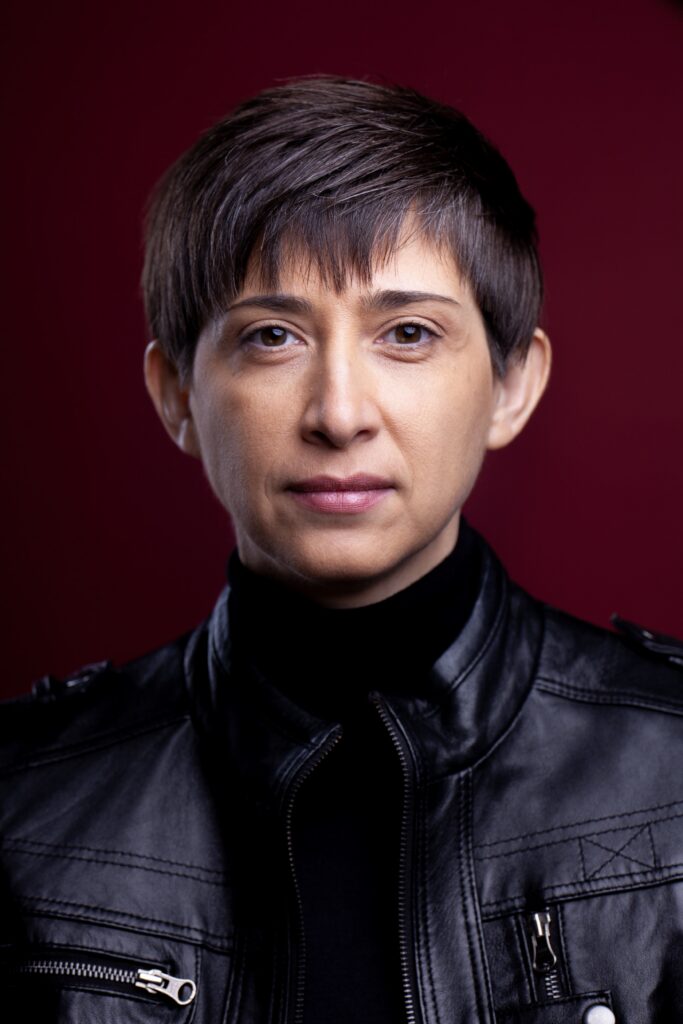
Sabrina Martino, is a circus arts instructor and a graduate of the École nationale de cirque de Montréal. Coming from France specially to offer this workshop.
For over 25 years, she has directed the Center for Circus Arts and the Performing Arts Génération Cirque in Strasbourg (France), where she supports artists of all ages and skill levels in their practice and development. She is also the executive director of the circus arts festival (and little surprises) Les Ébouriffées, an event dedicated to creation, presentation, and community building around the circus arts (Strasbourg, France).
Passionate about movement and understanding it, she specialized in neuroscience applied to movement. Today, she is a trainer and practitioner in neuroscience applied to artistic and circus movement. Her approach draws on current neuroscientific knowledge to offer concrete, customizable tools that improve the quality of movement, promote motor learning, optimize performance, and help prevent injuries.
Learn more about this method here.
Photo credit: Hilda Castillo
